


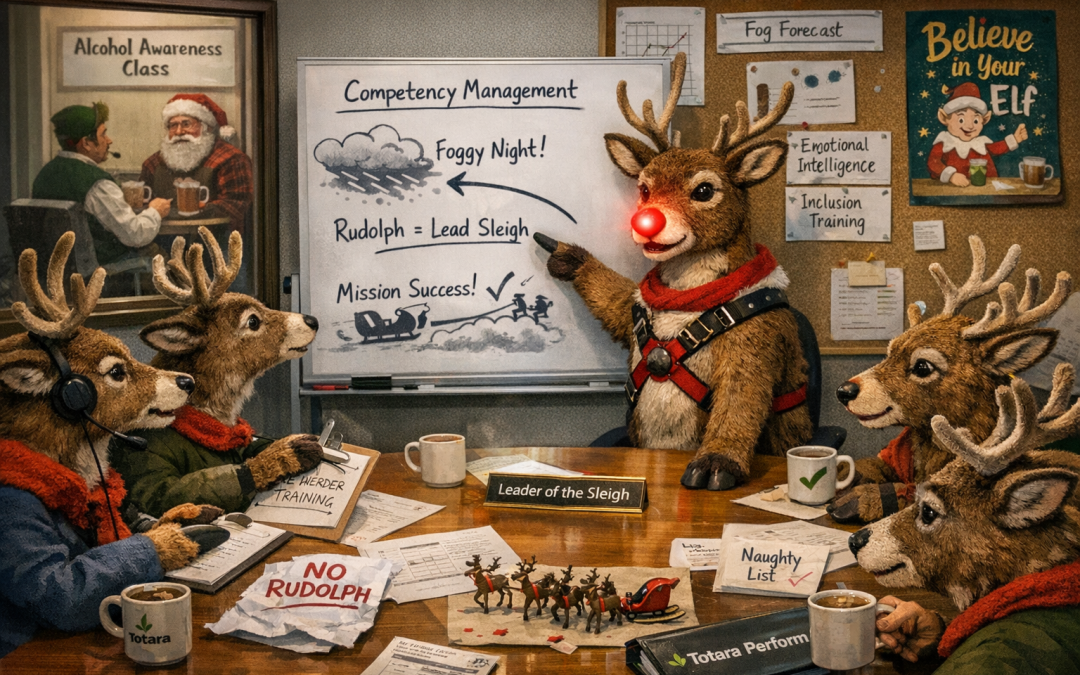
Competency Management Case Study: Rudolph the Red-Nosed Reindeer
Topic: Workplace Bullying, Misfit Roles, and Competency-Based Leadership Placement
1. Organizational Context
Santa’s sleigh team consists of high-performing reindeer (Dasher, Dancer, Prancer, Vixen, Comet, Cupid, Donner, Blitzen) operating in a traditional, speed- and strength-focused environment. The dominant performance criteria are conformity, athleticism, and participation in established “reindeer games.”
2. The Employee: Rudolph
Rudolph enters the organization with a distinctive trait: a highly luminous red nose.
- Core competency: Exceptional visibility in low-light and fog conditions
- Initial role assignment: General reindeer duties (misaligned with strengths)
At this stage, Rudolph’s unique capability is visible but unmanaged.
3. Workplace Bullying and Exclusion
Rudolf suffered from the classic indicators of workplace bullying:
- Mockery and name-calling
All of the other reindeer / Used to laugh and call him names
- Social exclusion and gatekeeping
They never let poor Rudolph / Play in any reindeer games
From a management perspective, this reflects:
- Lack of psychological safety
- Poor inclusion practices
- Overreliance on normative performance standards
- Failure to recognize nontraditional competencies
Rudolph is not underperforming—he is mis-positioned.
4. The Trigger Event: Environmental Change
Then one foggy Christmas Eve…
A sudden shift in operating conditions (severe fog) exposes a capability gap in the existing team. Speed and strength alone are no longer sufficient. Visibility and navigation become mission critical.
This is a textbook example of how context reveals latent competencies.
5. Competency-Based Intervention
Santa, acting as an effective leader, performs an implicit competency assessment using the Totara Perform+ Competency Management Tool:
Rudolph with your nose so bright, / Won’t you guide my sleigh tonight?
Key management actions:
- Santa Identifies the relevant competency (illumination/navigation)
- Matches the competency to the task (guiding the sleigh)
- Reassigns role based on strengths, not tradition
Rudolph is moved from a poorly fitting generalist role into a specialized leadership position.
6. Outcome and Cultural Shift
Then how the reindeer loved him / As they shouted out with glee
Following success:
- Santa avoids any legal issues by driving a vehicle without proper lighting
- Peer perception changes from ridicule to respect
- Status is recalibrated based on contribution, not conformity
- Organizational culture adjusts once value is demonstrated
Importantly, this acceptance occurs after performance validation—highlighting a reactive, rather than proactive, inclusion culture.
7. Leadership Lessons
- Bullying often targets employees with visible but misunderstood differences
- Talent mismanagement is frequently a placement problem, not a people problem
- Competency management requires anticipating future conditions, not just optimizing for the present
- Inclusive leadership means recognizing value before crisis forces recognition
Conclusion
Rudolph was not “too different” for the workplace—he was simply ahead of its competency model. Once leadership aligned role design with individual strengths, Rudolph moved from marginalized employee to mission-critical leader, ultimately “going down in history” as the one who guided the sleigh.
Epilogue
- Rudolf has gained internet fame and can be seen on this seasons Great American Baking Show making his signature carrot cake.
- The other Reindeer are going through professional development intervention addressing their lack of emotional intelligence, inclusion awareness, and accountability.
- Santa Claus was asked for his comments on the situation and replied: “Ho, Ho, Ho, Merry Christmas everybody” as he downed yet another sherry. Following a chase across Lapland he was arrested by local police for drink driving and is currently on an alcohol awareness course.